life
The Splendour of You
Discovering the psychological barriers preventing you from sharing your voice
17 min
read
Summary
Our "battle-hardened" perspectives provide indispensable value, though we ourselves may be blind to that perspective. Fear of unoriginality, redundancy, and imposter syndrome silence our unique voices. Adopting a personal "constitution" of self love, and defining a good purpose liberates us to life.

by Miroslav Hradel on Unsplash
Article Voiceover
AI Reaction Audio
When I headed up the marketing department at our software development agency, I would periodically petition our employees to write technical articles for our company blog as a matter of creating high-quality inbound content for potential customers to read and associate with our brand. Most of the time they would try to squirm out of it, trying to remain focused on the “real work” of delivery with which they were more comfortable.
Their objections came in many forms, not the least of which was “I have nothing to say that isn’t already out there on the internet” to which my retort would be something like “yeah, but it’s on somebody else’s blog directing traffic to their website, not ours.” This generally didn’t do the trick. They would pivot to the proposition that they “didn’t write well” to which I’d parry with “I’ll be your editor” and “who but you is better equipped to do this?” We’d play tennis like this for some time, with my budding initiative inevitably fizzling out for most whom I’d approach. I don’t bear them any ill will; these were busy people, and skepticism (my own included) is a part of the software developer’s DNA, so it can be quite difficult to surmount if you don’t come with receipts.
Every once in awhile I’d successfully co-opt one intrepid soul, whose agreement was generally predicated on the prospect of getting me off their back. In the short term, I’d be happy that I’d once again squeezed blood from the unyielding stone of our reluctant staff.
But I’d also be worried (and somewhat puzzled) about the fact that these really smart people we’d hired consistently felt they didn’t have anything valuable to offer when it came to the prospect of advice, expertise, or perspective surrounding the very activity with which they spent most of their professional lives engaged.
In more intimate settings, from time to time some would admit imposter syndrome as a motivating factor for keeping their heads down, even within the sphere of their own expertise, to say nothing of a marketing context. I would try to buck them up them with stories of my initial ineptitude as a new business owner, with particular focus on my early, ridiculous attempts at sales, hoping that this would help settle them more comfortably on the beginner path of writing. Of course this had the opposite effect than I’d intended.
A deficiency of originality
Perhaps the standards in our heads are too high. Sure, our experiences and perspectives are unique, but when I write I still struggle with the notion of “contributing something original” to the world, which seems a much more insurmountable bar. Whenever I learn something new from a thinker or inventor from the past, my exasperated brain usually blurts out something like “they came up with that 800 years ago?!” My grade 12 high school science teacher once told the class that “when Newton was your age, he’d invented Calculus.” I was happy that I’d located my pants that morning.

The Fretlight guitar - a “stolen” flash of brilliance. Image from fretlight.com.
The simple satisfaction of arriving at a punchy heading for one of my articles’ sections fades when I find thousands of others who have also used that exact phrase. Many years ago I thought I had first conceived of a guitar with lights beneath the fretboard to help new players learn until I first saw an advertisement for “The Fretlight.” For a long time, I nurtured a fuzzy but delightful concept about the nature of the harmonic series, which I later learned (from a beginner’s philosophy book, no less) had also crossed Pythagoras’ mind circa 500 BCE. It can be disheartening... a quick Google search almost never fails to disabuse me of any nascent delusions of originality, dispatching me time and again to the dark laboratory of my bunny bunker.

Generated by deepai.org
Our psyches struggle with this, because our egos want more than anything else to “blow your mind.” Alongside this, we fear the public ridicule that will surely ensue when our ideas are inevitably shown to be less original, less grand, and more redundant than we could ever have anticipated. So we bide our time awaiting a day in the far flung future when we’ll unleash a sudden flash of brilliance upon the unsuspecting herd, who will regale us with loud greetings and parades celebrating our obvious genius.
On the other hand, it doesn’t take a genius to understand that every blogger on the internet isn’t as prodigious as Sir Isaac Newton, yet they still provide value to their audiences. Further, there are a boatload of fellow travelers to whom your offering, original or otherwise, is a rainbow of illuminations. Anything you might propose is “original” to all who haven’t heard it yet. Each new artist and appraiser breathes new life into an idea, adding their own flavour to the mix. Finally, people change over time, such that the same idea delivered to them a second time hits differently. Everything old is new again. There’s value in whatever you have to offer, even if you’re not the legendary, god-like source. And the value of any perspective requires that it be heard.
Blind to your own spark
At the celebratory dinner following the sale of our company, our agent joked that former owner operators weren’t eminently hirable, and would eventually be forced to start other companies if they were to ever achieve gainful employment again. Though I was initially puzzled and amused by the comment, after a time I came to see what he meant.
I did struggle with the notion of what specific skills I’d highlight to attract employers. I’d been involved in management of almost every aspect of our business over its 21-year history, including at various times heading up each of the sales, marketing, and HR departments. In addition, I also had legal and operational leadership and customer relationship ownership for all of my accounts, as did both of my co-founders, for theirs. We even did all of the software development on our early client projects. Owner-operators understand that you have to be a jack-of-all-trades, only delegating responsibilities to new hires when your eyes are bleeding from far too many late nights spent writing proposals and filing taxes.
On a résumé this looks like the chaotic sea spray from the shifting stance of an untethered surfer playing in the waves. There’s nothing there for an HR rep to get their fingers into; nothing to easily gain the specificity required to recognize that I might be a good fit for “role X.” Thinking about it even now, I’d have a hard time summarizing my specific value to a hiring manager without first wading through an unwieldy assortment of long-ass storytelling that likely wouldn’t fit into the interview format.

Photo by Guy Kawasaki on Unsplash
Sometimes I wonder to myself if I really have any remaining commercial value at all. The excellent software people we hired over the years were now better with the new software tools than I was. My project management skills were aging out over time, fading in applicability to the dynamics of modern AI-native software projects. I could solve people problems decisively enough, but here my HR manager was much more deft than me at projecting empathy. I was probably the most capable branding and marketing person at the company, but not nearly as proficient as any intermediate specialist you’d find out in the wild.
But on numerous occasions subsequent to that dinner, and because my brain was passively on the hunt for the answer, it slowly revealed itself. My value was hiding in plain sight within my perspective — the battle-hardened network of muddy trenches scattered throughout my experience. It gave me the judgement and confidence needed to handle all manner of problems within the realm of a mid-sized software development agency and beyond.
Leaders spend most of their time dealing with the problems that no-one else wants to. These are uncoincidentally the most intractable problems in the organization, and they become your responsibility by default; delegation isn’t an option. I wasn’t always successful in dealing with them, but they continuously forced me onto a trajectory littered with optimization, risk, discomfort, and creative problem solving.
With this discovery, I reexamined the fuzzy fragments of advice I’d given to staff over the years, and how it was that I came by them in the first place. What now seemed obvious to me was sometimes a revelation to a protégé. I’d forgotten the path connecting the dots between my experience and my knowledge. The origins of my perspective had all blended hazily into the background.
This might be why we aren’t good judges of what we have to offer the world. We notice step-changes in our growth — that distinctive clank of the hammer blow as we are forged in the fire — but over time we become relatively blind to the unyielding sharpness of our long-tempered blades.
The accidental value of being yourself
There are innumerable channels, blogs, and communities on the internet, each started by an individual who felt that they might have something to offer. Each has an audience. Some are small, and others are gigantic. Each is a proof of a kind for the creator that audiences value them. If you had an online channel, how would you find your audience, and how would you serve them?
The “1,000 True Fans” concept, introduced by Wired magazine co-founder Kevin Kelly in 2008, posits that a creator — artist, musician, writer, or entrepreneur — only needs 1,000 dedicated, “true” fans to make a sustainable living. This theory argues that building deep, direct relationships with a small, loyal audience is more achievable and financially viable than chasing mass-market fame.

Book by Jon Longhurst on the 1000 true fans concept proposed by Kevin Kelly
Internet technologies make it more possible than ever before to build an audience around a brand or topic. And there are very likely at least 1000 people in the world who’d value any particular thing you might propose, no matter the niche. I hear your inner critic saying “but I don’t have a niche or skill worth sharing,” but stay with me.
People attach to unexpected aspects of a creator’s work. In one of his signature sparse, off-the-cuff video voiceovers, Blacktail Studio maker Cam Anderson admitted to his audience that he knows that many people don’t come to his channel to learn how to do woodworking, but instead just want to relax at the end of the day and watch something satisfying and calming. His channel fits the bill perfectly. We can’t always predict what will be valuable to our audience; the listener’s unique circumstances and needs determine what becomes meaningful. The connective tissue of the community is a reflection of who we are in totality. Cam is the unique and indispensable imprint woven into his channel’s fabric.
Dan Koe, among other online gurus, proposes that the most durable niche to occupy is the niche of you, which is comprised of your thoughts, interests, desires, and all of your other shifting dynamics; no less than your entire persona. In this framework, you can never “go off topic” as long as you remain authentic to who you are. And in a world of cookie cutter AI slop content, online audiences crave the connection one can only get from real people who open their hearts and minds to their audiences.
Mull over the 1000 true fans concept long enough, and you’ll realize that what you have to offer will almost certainly be valuable to someone, even if you currently have no clue as to who or why. Most people in the world may not find you, much less subscribe to your channel and participate in your community. But given enough time and consistency, your tribe will very likely start to trickle in. And the growing fellowship will be strong because those present will have selected themselves into it over time, as opposed to having been shepherded there absentmindedly by the algorithm. And all you had to do was be yourself.
Love and esteem
You need not become a founder or creator to understand intuitively that your perspective has value. Further than this though, I’m often surprised and saddened by the fact that some people don’t seem to have a sense of their own basic intrinsic value. When I posit this to them without evidence, they knit their brow, puzzled that I could be so sure. Some have wept with my continued assertion. It makes me wonder about their experiences during their formative years.
We all have moments of self doubt, but I’m talking about ground zero, here. A person with low self esteem experiences all kinds of difficult challenges. They may adopt impossible standards, accepting nothing less from themselves than perfection, which of course never arrives. They struggle with empathy and love, because they haven’t themselves been transformed by them. They don’t forgive themselves (or others) easily when they make mistakes. They can’t be full participants in their important relationships. Some believe that low self esteem is at the heart of all human atrocity. The negative downstream effects are too numerous to name.
Low self-esteem is the root cause of practically all the pain and misery in the world.
It’s what drives war and torture and genocide. It’s what evil is.
Do you think Hitler liked himself? Or Cortés? We hate others because we hate ourselves.
Leonard Quinhagak, Heal Thyself, Northern Exposure, 1993
Key & Peele’s “A Wise Bully” skit points at this with a surprisingly deft touch. It should be a required watch for all high school students.
Bully: Why you readin’, bitch?
Student: Because I like to read, and this is a really good book.
Bully: You’re a really good bitch, bitch!
Student: Why you gotta bother me, man?
Bully: Because, I’m not doing very well in school. I’m reading at a third-grade level. I really don’t want to get left back, so when I see somebody reading for fun, it makes me feel that much more stupid!
Student: Um, I didn’t know that. Thanks so much for opening up to me.
Bully: Shut up, queer!
Student: I don’t understand. Why... I mean why you gotta go there?
Bully: I’ve been having sexual fantasies about some of the other guys at school. What?! <high-five> Gimme that! I’m afraid of these feelings and what they might mean. It’s like, because I hate myself so much, I gotta point that hate outward towards you!
Student: You understand this on such a deep level that... Whoa!
Bully: I don’t understand shit! Now I’m gonna punish you physically for acknowledging my emotional problems!
Student: Wait wait wait! I was gonna say if you understand yourself so well, then maybe you should try working on changing it.
Bully: Of course I want to change it! But it’s the only defense mechanism I have against deeper, more terrifying problems buried inside of me!
[brakes squeak]
You’re lucky my dad’s here.
Dad: Get in the damned truck, son. I need to take you home and beat on you ‘cause I hate myself, and you look like your mother who left me. Then I’m gonna block out all of the guilt I feel over mistreating you with a river of vodka!
Bully: I’m gonna internalize that and unknowingly transfer it onto you tomorrow.
Coming reluctantly....
“A Wise Bully” Key & Peele, 2021
Love, particularly self-love, transforms you from within. My mom loved my brother and I immensely. She always thought deeply about others and gave herself fully to them in whatever way she could. She thoroughly and consistently showered us with warmth, attention, care, and love throughout our lives, so much so that to us, this seemed completely natural. She would sometimes muse that if anything ever happened to us, she’d likely “throw herself off a cliff.” I chided her for these macabre comments, objecting that they constituted grossly inappropriate “safety pressure.” But I secretly knew that what she said was true.
My brother and I, of course, took this mostly for granted, not fully comprehending the pervasive extent of her love’s presence until she was gone. Her passing in late 2023 carved a deep and painful hole in my psyche that I’m still wondering how to fill. Like a fisherman floating longingly atop an empty sea, I’ve mostly come up short.
Any attempt at a full description of her effect on me would require an inestimable number of pages, and anyway would have you rolling your eyes... “After all, Jeremy, she was your mom. Of course you feel that way.” Sure, I get it. This is to say nothing of the fact that the collage of testimony from which we form notions of “our parents” is far from coherent. Which of the vast landscape of impressions pervading our story are directly traceable to their origins? Each error of attribution is nothing but a grain on a beach full of sand. But I can say with complete confidence that I felt loved by my mom. And it would be hard to deny that my inherent sense of worth was due in large part to that influence.
Maya Angelou talks about her mom and describes love as a powerful liberating force in the moving clip below.
I am grateful to have been loved, and to be loved now, and to be able to love, because that liberates. Love liberates. It doesn’t just hold — that’s ego. Love liberates. When my son was born, I was 17. My mother had a huge house; 14 room house. At 17, I went to her, I said “I’m leaving.”
She asked me “you leaving my house” and she had live-in help.
I said “Yes, I found a job and I’ve got a room with cooking privileges down the hall. And the landlady will be the babysitter.”
She asked me “you’re leaving my house?”
I said “Yes ma’am.”
“And you’re taking the baby?”
I said “Yes.”
She said All right, remember this: when you step over my door sill: you’ve been raised. You know the difference between right and wrong. Do right. Don’t let anybody raise you and make you change. And remember this: you can always come home.”
I went home every time life slammed me down and made me call It uncle. I went home with my baby. My mother never once acted as “I told you so.”
She said “oh baby’s home oh my darlin! Mom’s gonna cook you something. Mother’s gonna make this for you.”
Love. She liberated me to life. She continued to do that.
When my son may have been 5 years old, my mother would pick him up all the time and feed him and I went to her once a month and she would cook for me. So one day I went to her house and she’d cooked red rice, which I loved.
After we finished eating, we walked down the hill and she started to cross and she said “wait a minute baby…” I was 22 years old she said “Wait a minute baby. You know, I think you’re the greatest woman I’ve ever met.” She said ‘Mary McLeod Bethune, Eleanor Roosevelt, and my mother. You’re in that category.’”
Then she said “Give me a kiss.”
I gave her kiss and I got onto the street car I can remember the way the sun fell on the slats of the wooden seats. I sat there and I thought about her. I thought “Suppose she’s right? She’s intelligent.” And she says she’s too mean to lie so suppose I am going to be somebody?
She released me. She freed me to say I may have something in me that would be of value. Maybe not just to me. You see? That’s love.
And when she was in her final sickness, I went out to San Francisco and the doctor said she had three weeks to live I asked her “Would you come to North Carolina?”
She said “yes.”
She had emphysema and lung cancer. I brought her to my home. She lived for a year and a half. And when she was finally… finally in extremis — she was on oxygen and fighting cancer for her life — and I remembered her liberating me, and I said I hope I’ll be able to liberate her. She deserved that from me. She deserved a great daughter, and she got one.
So in her last days, I said “Now I understand that some people need permission to go. As I understand it, you may have done what God put you here to do. You were a great worker. You must have been a great uh lover cuz a lot of men and if I’m not wrong maybe a couple of women, risked their lives to love you. You were a piss poor mother of small children, but you were a great great mother of young adults, and if you need permission to go, I liberate you.”
I went back to my house and something said “go back.” I was in my pajamas. I jumped in my car and ran, and the nurse said “she’s just gone.”
You see, love liberates. It doesn’t bind. Love says “I love you. I love you if you’re in China; I love you if you’re across town. I love you if you’re in Harlem. I love you! I would like to be near you. I’d like to have your arms around me. I’d like to hear your voice in my ear. But that’s not possible now so I love you. Go.”
Love Liberates - Dr. Maya Angelou
Finding ground zero
Decoding the source of your feelings of self worth, is perhaps not as important as having them. One might even argue that nothing has intrinsic value in the larger sense, and as such we can’t really claim this value for ourselves, unremarkable smudges on the cosmic canvas that we are. But human beings are meaning makers; we strive to make sense of our own existence, for whatever reason. The universal quandary of “why am I here?” puts people on a never-ending quest to locate that answer, whether or not one exists. We are constantly interviewing candidates and proposing them to ourselves to see if they enliven us. It doesn’t matter if this is a bug or a feature — it’s what we do. A person with a purpose has value by definition, at least for that purpose. So whether you concoct or realize a good purpose, participating in one makes you inherently valuable and “good.”
So how do we learn to value ourselves? Our individual biology and set of experiences makes us unique, but this alone isn’t sufficient to prove our inherent worth. In the preceding sections, I’ve tried to decode some of the reasons for our reluctance to value ourselves, and perhaps uncover and loosen up some of the crusty negative self talk I’ve heard (and participated in) over the years, but of course this is only a starting point.

Photo by Amandine BATAILLE on Unsplash
Each voice is an integral part of the human story. My proposition is that inherent worth isn’t earned or achieved; it’s just part of being human. On top of this, your experiences generate a valuable, necessary perspective. Arriving at the point where you believe you have nothing of value to offer means that the world can never receive your contribution.
While we may worry interminably that we may not be “good enough,” few of us struggle to know what “better than yesterday” looks like. Striving in this direction means there is some chance that we will eventually end up at good, by daily induction.
We need a jumping off point from which we can begin a productive journey. In the United States Declaration of Independence, Jefferson famously declared a number of “self-evident truths,” which at the time were by no means self-evident.
We hold these truths to be self-evident, that all men are created equal, that they are endowed by their Creator with certain unalienable Rights, that among these are Life, Liberty and the Pursuit of Happiness.
Thomas Jefferson, US Declaration of Independence, 1776.
The proclaimed “equality of men” and newly certified “unalienable rights,” were of course aspirational — just ask the slaves. They were meant to act as the constitution’s bedrock: a set of good and valuable guiding principles upon which a new nation could be built. Surely it’s better that these truths were declared prematurely than if they hadn’t been at all.
We can locate our self worth “by accident,” just by being loved when we’re young. We can find it later by simple recognition of our equal standing at birth with other humans in the world. Or we can discover it by internalizing a good purpose. My guess is that we have nothing to lose by adopting the proposition of our intrinsic value as axiomatic, even if we don’t fully feel it yet — another expression of the “fake it ‘til you make it” context we humans seem to continuously inhabit. From that vantage point, I believe we’ll be in a better position to experiment with positive purpose, emboldened by our new constitution.
—————————————————————
Music
Voiceover background music from #Uppbeat (free for creators!):
https://uppbeat.io/t/lloom/golden-shimmer
License code: Q7HPOSJJBPIDJ882
Podcast music from #Uppbeat (free for creators!):
https://uppbeat.io/t/soundroll/keep-going-your-way
License code: DTYCE8DCFBRK5OOF
AI Disclosure
All text written and spoken by Jeremy Chan — a human being!
Podcast reaction audio generated by Google Notebook
Some images generated by AI; see caption notes for each
More in
life

life
Oct 18, 2024
Why You're Stuck in the Waiting Place
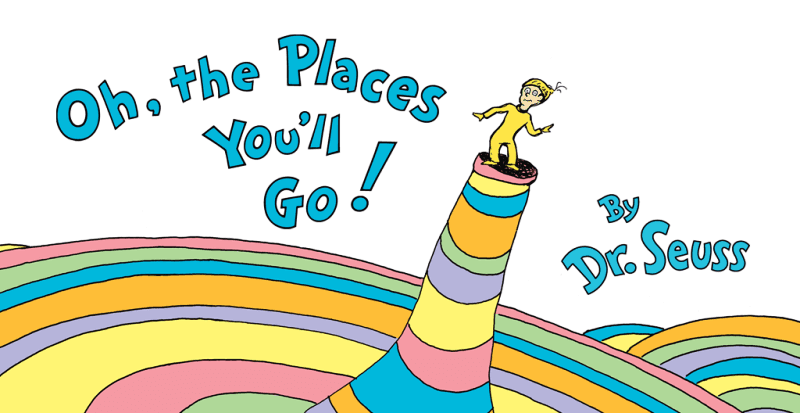
Dr. Seuss and the scarcity mindset
"The Waiting Place," conceived by Dr. Seuss in "Oh, the Places You'll Go!" is a metaphorical state of mind characterized by inaction and inertia. ChatGPT's response to a prompt to explain why the Waiting Place is no place to be will surprise you.

life
Jan 8, 2015
Misery On a Train
Riding the holiday line with the passenger From hell
There are far too many soul-sucking opportunities and invitations to a vigorous defense of one’s own position, but sometimes a strong intuition that you're right helps you to avoid getting pulled into silly arguments.